Future Forward Environments
Angular Consultores © 2025
Future Forward Environments
Angular Consultores © 2025
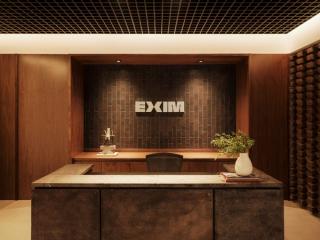
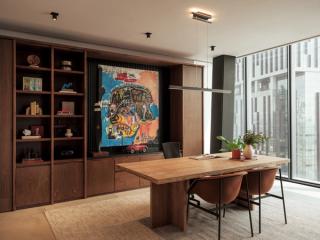
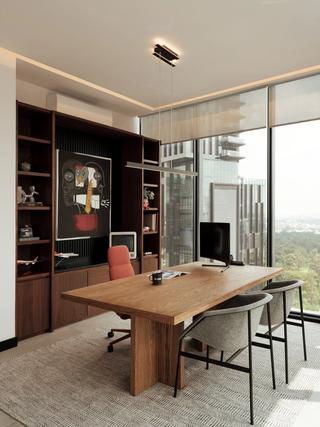
Corporate offices in Torre Helix that explore materiality and sensory experience beyond the institutional. Two contiguous environments are connected through integrated circulation and reception areas, while stone surfaces, handcrafted clay, and textiles establish a formal connection. The design combines flexibility, fluid circulation, and a strategic color palette, creating a timeless environment.
For this project, we partnered with Ribba Estudio, a Madrid-based interior design studio, whose international perspective and design sensitivity became a key part of the project’s narrative. This collaboration enriched the conceptual framework and informed a shared approach to materiality, spatial continuity, and user experience, allowing the offices to be conceived as more than functional workspaces.
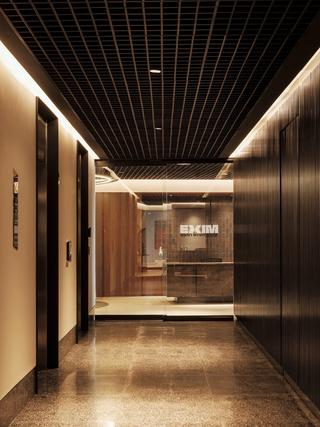
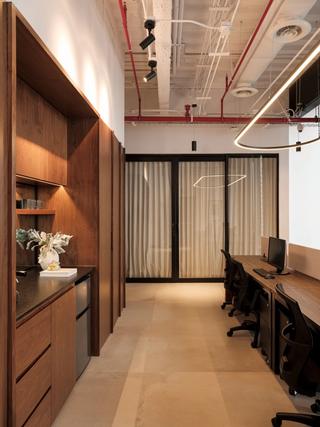
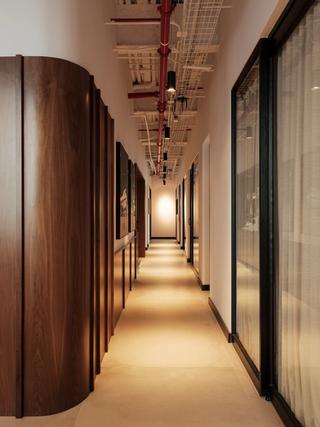
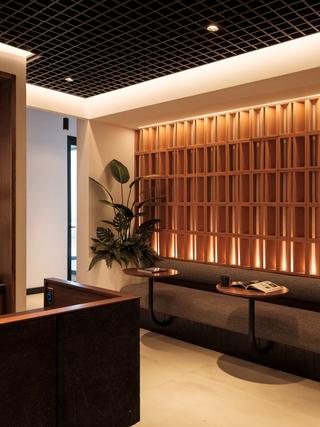
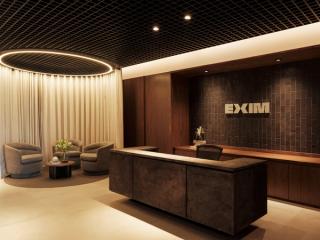
Within Torre Helix, in the financial district of Guadalajara, Jalisco, two adjacent offices unfold on the same level, each with its own uses and activities, yet connected through integrated reception areas that reflect the dynamics of one another, a corridor that organizes circulation alongside the elevators, and finishes that generate unity throughout the floor. More than independent offices, these environments engage in dialogue with one another, proposing a sequence that connects each area visually and sensorially. The layout, transitions, and relationships between materials seek to establish a balance between autonomy and connection, generating a unified experience as one moves through the floor.
Can an office reinterpret its environment and finishes beyond the institutional, exploring alternatives that transform the typical atmosphere and appearance of corporate settings? This question was central to the project’s conceptualization. Given that two distinct environments coexist on a single level, it was necessary to implement strategies that not only resolved the functionality of each area, but also established a natural relationship between them. The long-term nature of these offices allowed the design to be approached with a broader horizon beyond the usual timeframe for this typology developing solutions and selecting finishes capable of withstanding the passage of time and the intensity of prolonged use. Durable solutions were chosen for long-term performance, exceeding conventional expectations.
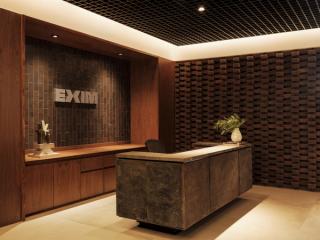
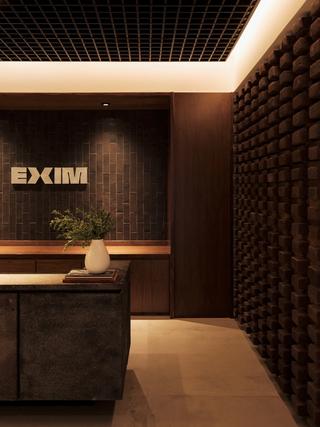
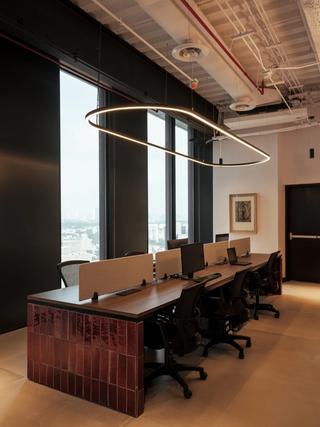
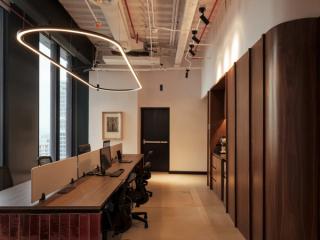
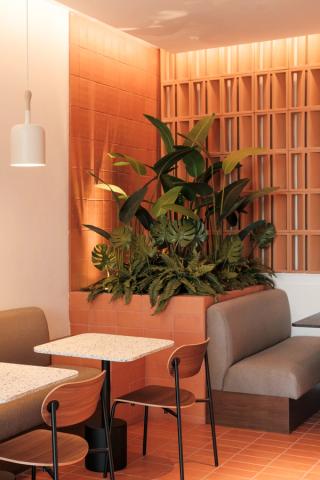
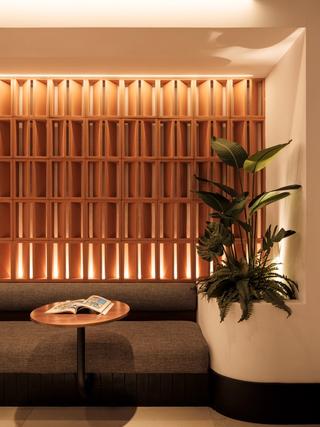
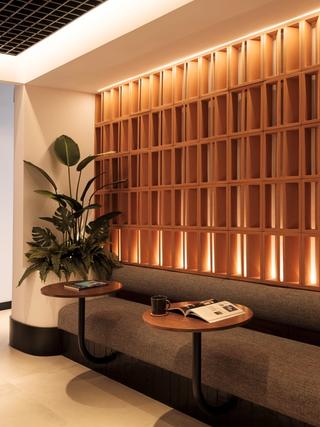
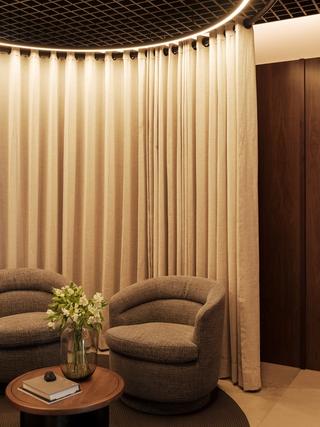
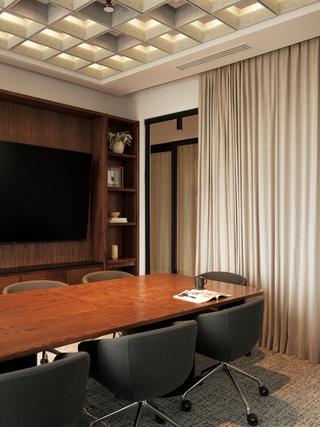
The larger office, designed for GE, deploys a robust and carefully articulated material palette in which surfaces and finishes dialogue with one another without relying on color as the primary device. When color is used, it is introduced strategically not to literally define the brand’s identity, but as an abstraction of the tones that represent it adding character to the environment without visual saturation. From the reception area, in harmony with the company’s automotive nature, stone and textile surfaces generate a dialogue between hardness and softness: black cantera stone and clay, in their natural or fired expressions and in handcrafted tile pieces, coexist with curtain textiles and furniture. This contrast creates a journey through the spaces that produces a continuous perception of the design and reinforces a coherent experience across both environments.
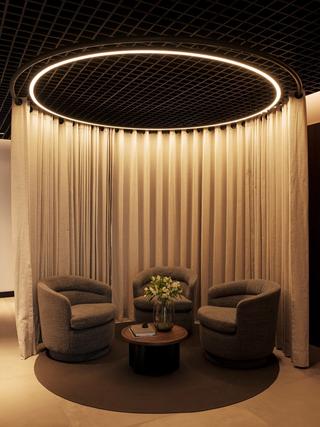
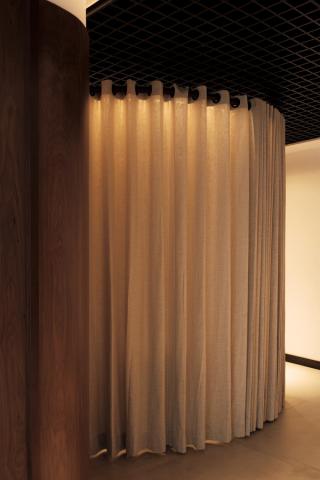
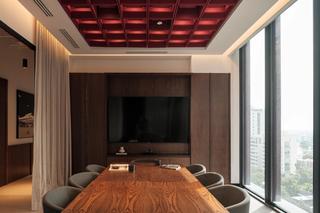
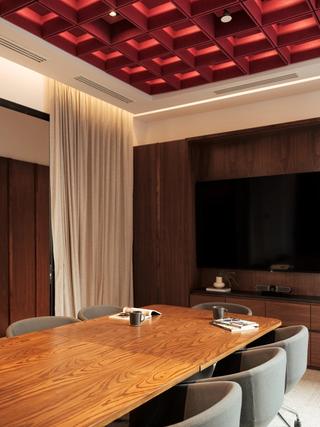
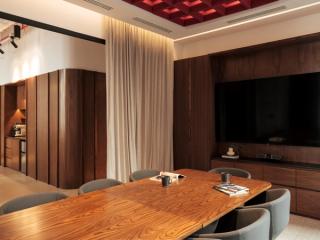
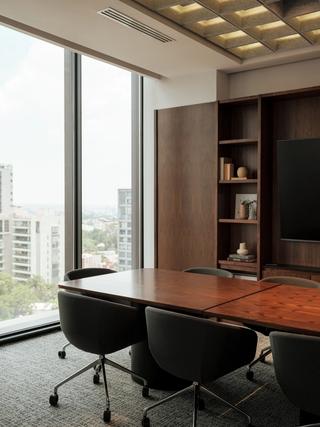
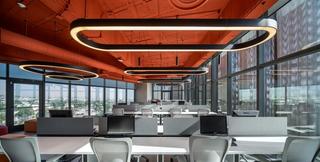
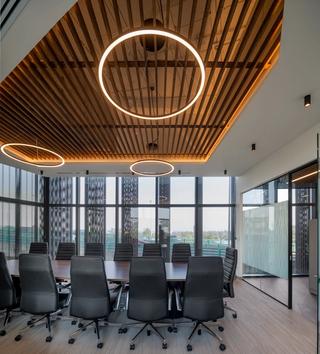
The grid ceiling acts as a unifying thread that articulates the project overhead. It extends from the elevators through the corridors and into both reception areas, expanding in scale within meeting spaces and adjusting its color to introduce nuances that give character to the space. In these rooms, white and red tones not only reinforce visual identity, but also enhance acoustic performance by reducing reverberation and increasing comfort. Curved corners, a recurring gesture, soften interior volumes and reinforce a sense of fluidity, inviting movement and exploration. Flexibility is further enhanced through movable walls in certain meeting rooms, allowing spaces to be reconfigured according to changing needs and supporting different work scenarios.
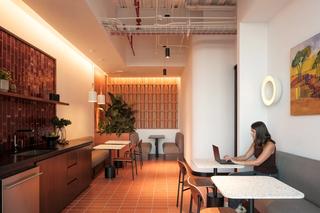
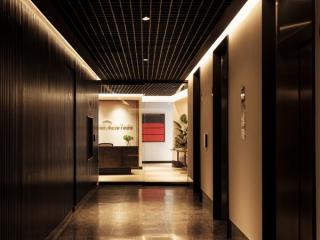
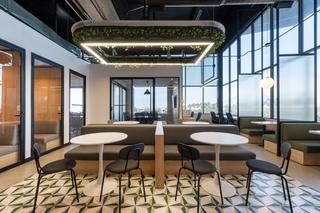
The elevator core, initially received without finishes, was transformed into an element of opportunity. Rather than representing a challenge, it became a reference point from which the language of the entire floor was articulated. The selection of materials, textures, and finishes stemming from this core reinforces design coherence and establishes a perceptible integration from the entrance to the meeting rooms. In the dining area, orange is introduced as an expression of the brand, creating contrast with the stone’s ancestral, mineral surfaces, while lighting and other technological elements are subtly integrated, engaging in dialogue with the materiality of the space.
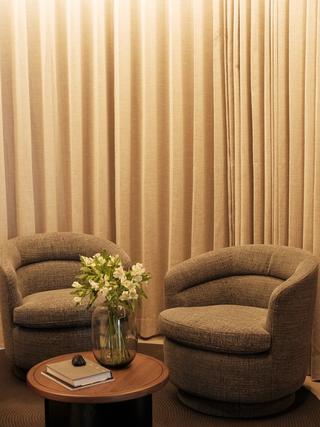
The furniture deliberately departs from the rigidity of a conventional office, leaning toward a proposal closer to the residential. Its presence is articulated with the finishes and volumes, contributing to a sense of warmth and proximity. Each decision reinforces the intention to create a timeless, comfortable, and balanced environment, conceived for those who inhabit these spaces during extended workdays particularly executives and high-level teams. The result is a project that combines functionality and sophistication, where finishes, light, and geometry relate coherently, offering a clear, direct experience centered on its users.
Design Team:
Fatima Ribbadeneira (Ribba Estudio), Ximena Huguenin (Ribba Estudio), Paula Miranda (Ribba Estudio), Alfredo González (Angular), Diego González (Angular), Jesús Quiroga (Angular), Gabriela Olivera (Angular), Alejandro Arrieta (Angular), Diana Ocampo (Angular)
Collaborators:
CM Kling + Associates
María del Pilar Toro Ortiz
Jess Castro
Metta CDV Ingenierías
Ameth Carbot
Aldair Torres
General Contractors:
Raúl Jiménez Flores
Enrique Jimenez
Photography:
Credits: Lorena Darquea
Contact: hola@lorenads.com